

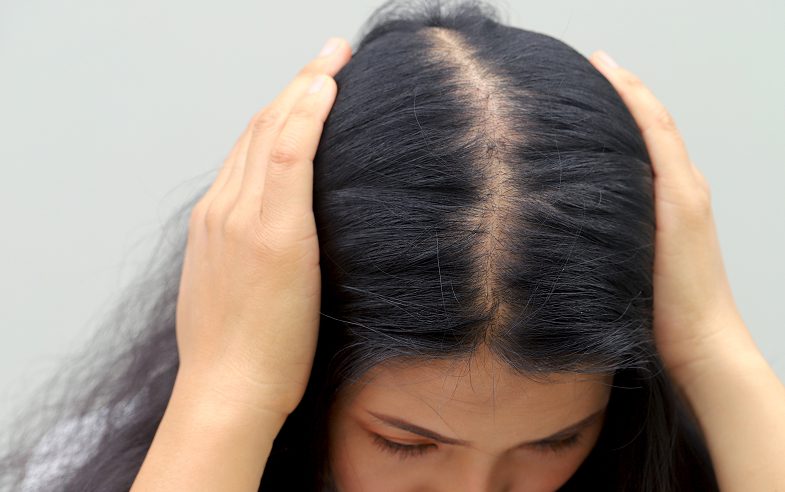
Hair loss is a frequent concern and one of the main reasons for a dermatology consultation. Although it is normal to lose some hair daily, there are situations in which this loss can indicate a scalp disease or other health problem that benefits from specialized evaluation.
Knowing how to distinguish physiological hair loss from a situation that requires diagnosis is the first step to preserving hair health and starting the most appropriate treatment.
If the loss persists or you notice changes in hair density, it may be important to perform an expert evaluation of hair diseases and alopecia.
Is it normal to lose hair every day?
Yes.
Hair grows cyclically, and each follicle goes through different phases throughout life. For this reason, it is normal to lose between 50 and 100 hairs a day, which are naturally replaced by new strands.
This renewal is part of the normal hair cycle and, in most people, does not cause any decrease in hair density.
When does hair loss stop being normal?
Hair loss should be valued when:
- Nota uma perda de cabelo superior ao habitual.
- O cabelo fica progressivamente mais fino.
- O couro cabeludo começa a ficar mais visível.
- Surgem zonas com falhas bem definidas.
- A queda persiste durante vários meses.
- Existem sintomas como dor, comichão ou descamação do couro cabeludo.
In these cases, it is important to identify the cause before starting any treatment.
What are the most frequent causes?
There are different types of alopecia and each requires a distinct approach.
Alopecia androgenética
It is the most frequent cause of hair loss in both men and women.
It is characterized by a progressive decrease in hair density, influenced by genetic and hormonal factors.
The earlier it is diagnosed, the greater the chances of controlling its evolution.
Deflúvio telogénico
It corresponds to a diffuse hair loss that usually appears a few months after a triggering event, such as:
- Stress intenso.
- Cirurgia.
- Febre ou infeções.
- Pós-parto.
- Perda significativa de peso.
- Carências nutricionais.
- Alguns medicamentos.
In most cases it is reversible, as long as the cause is identified and treated.
Alopecia areata
It is an autoimmune disease that causes sudden hair loss in rounded plaques.
It can only affect the scalp or other areas of the body and has a variable evolution from person to person.
Don’ts
In the event of persistent hair loss, it is common to immediately resort to supplements or cosmetic products.
However:
- Nem toda a queda de cabelo resulta de falta de vitaminas.
- Nem todos os suplementos são necessários.
- O tratamento adequado depende sempre da causa da alopecia.
Starting treatments without a diagnosis can delay the right approach and compromise results.
How is the diagnosis made?
The dermatology consultation allows you to identify the cause of hair loss through a detailed clinical evaluation.
Depending on each case, different valuation methods may be used, including:
- Observação do couro cabeludo.
- Dermatoscopia (tricoscopia).
- Avaliação do padrão de queda.
- Revisão da história clínica.
- Pedido de exames complementares quando necessário.
The goal is to establish an accurate diagnosis before defining treatment.
Is there treatment?
Yes.
Today there are several therapeutic options to control hair loss and stimulate hair growth.
Treatment may include:
- Medicação tópica ou oral.
- Correção de défices nutricionais.
- Tratamento de doenças associadas.
- Procedimentos dermatológicos.
- Acompanhamento regular para avaliar a evolução.
The choice always depends on the type of alopecia and the characteristics of each patient.
When should you see a dermatologist?
It is advisable to make an appointment if:
- A queda persistir durante mais de algumas semanas.
- Notar diminuição da densidade capilar.
- Surgirem zonas sem cabelo.
- Existirem sintomas no couro cabeludo.
- Tiver antecedentes familiares de alopecia.
- A queda ocorrer de forma súbita ou intensa.
The sooner the problem is identified, the greater the chances of controlling the evolution and preserving the health of the hair.
The importance of an early diagnosis
Hair loss can have different causes and not all of them require the same treatment. A correct diagnosis allows you to identify the source of the problem and define the most appropriate approach for each case.
If you are looking for a specialized evaluation, learn more about the Hair Loss, Alopecia and Hair Diseases consultation, where a personalized evaluation is carried out and oriented to the diagnosis and treatment of the different forms of hair loss.